In short
Size the banner for how far people stand, then for the wall, fence, or tent it has to fit. A 2×6 works on a door. A parking-lot read needs 3×8 or 4×8.
Start with the read, not the printer’s favorite rectangle. If drivers have three seconds at 40 feet, a 2×4 is decoration. If someone is on the sidewalk in front of your door, a 4×10 is yelling.
A working size chart
| Where it hangs | Typical size | Read from |
|---|---|---|
| Door or window | 2×4 or 2×6 | 8–15 ft |
| Storefront fascia | 2×6 or 3×6 | 15–30 ft |
| Fence or lot | 3×8 or 4×8 | 30–60 ft |
| Street / building | 4×8 or 4×10 | 60 ft+ |
| 10×10 tent valance | 2×8 or 3×8 | walk-up |
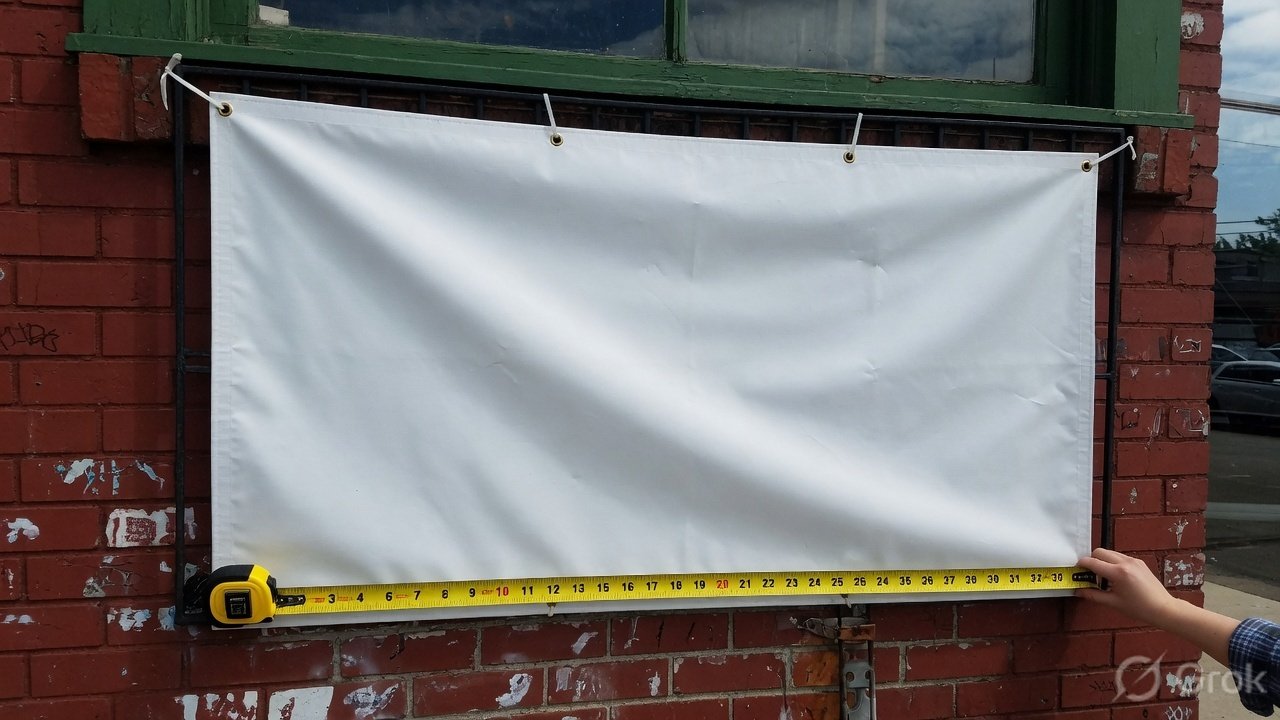
Those are starting points. Measure the opening. Leave room for grommets and a little air at the edges so wind does not saw the vinyl on a bolt.
Type has to fit the size
A common miss: people pick a 3×6 then write a paragraph. Cap height is the limiter. Rule of thumb: about 1 inch of letter height per 10 feet of viewing distance. Full table lives in banner letter size by viewing distance and how big text should be.
Common pairs shops actually print
Standard vinyl sizes exist because they nest on a roll. 2×6 vs 3×6 is the usual storefront fork; we broke that out in 2×6 vs 3×6. Tents and booths are their own jobs: 10×10 tent, trade show booth, retractable stands.
Material follows the weather
Size does not pick the vinyl. A 4×8 on a fence in wind wants 18oz or mesh, plus a hem and grommets on a real spacing. Indoor 2×6 can stay 13oz.